
Sources of Strength
This page gathers practical and poetic views of nourishment, energy, needs, time, and the habits that drain us. Each translated image is followed by a note describing known limits or meaning shifts.
Sources of Strength
Strength has many sources: the body, the heart, thought, purpose, and relationship. Healthy sources restore capacity over time; substitutes may provide a short lift while quietly increasing dependence or exhaustion.
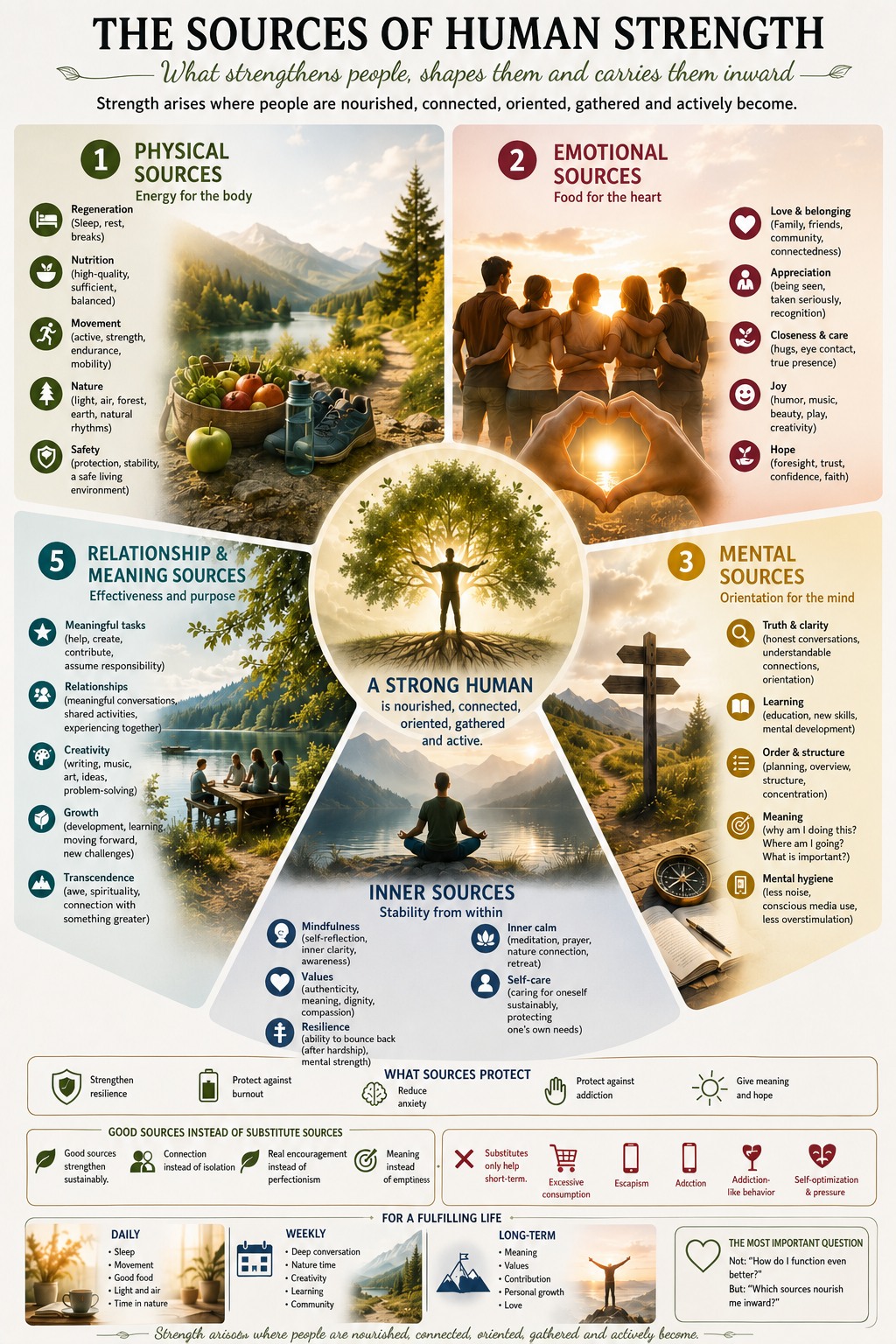
Translation note: The opening phrase says strength “shapes” people instead of “protects” them; some substitute-source terms are narrower than the German.
Reducing Stress in Relationships
Relationship stress is rarely solved by one force alone. Relief can come from bodily regulation, emotional honesty, clearer thought, firm decisions, and a form of contact that respects both people.
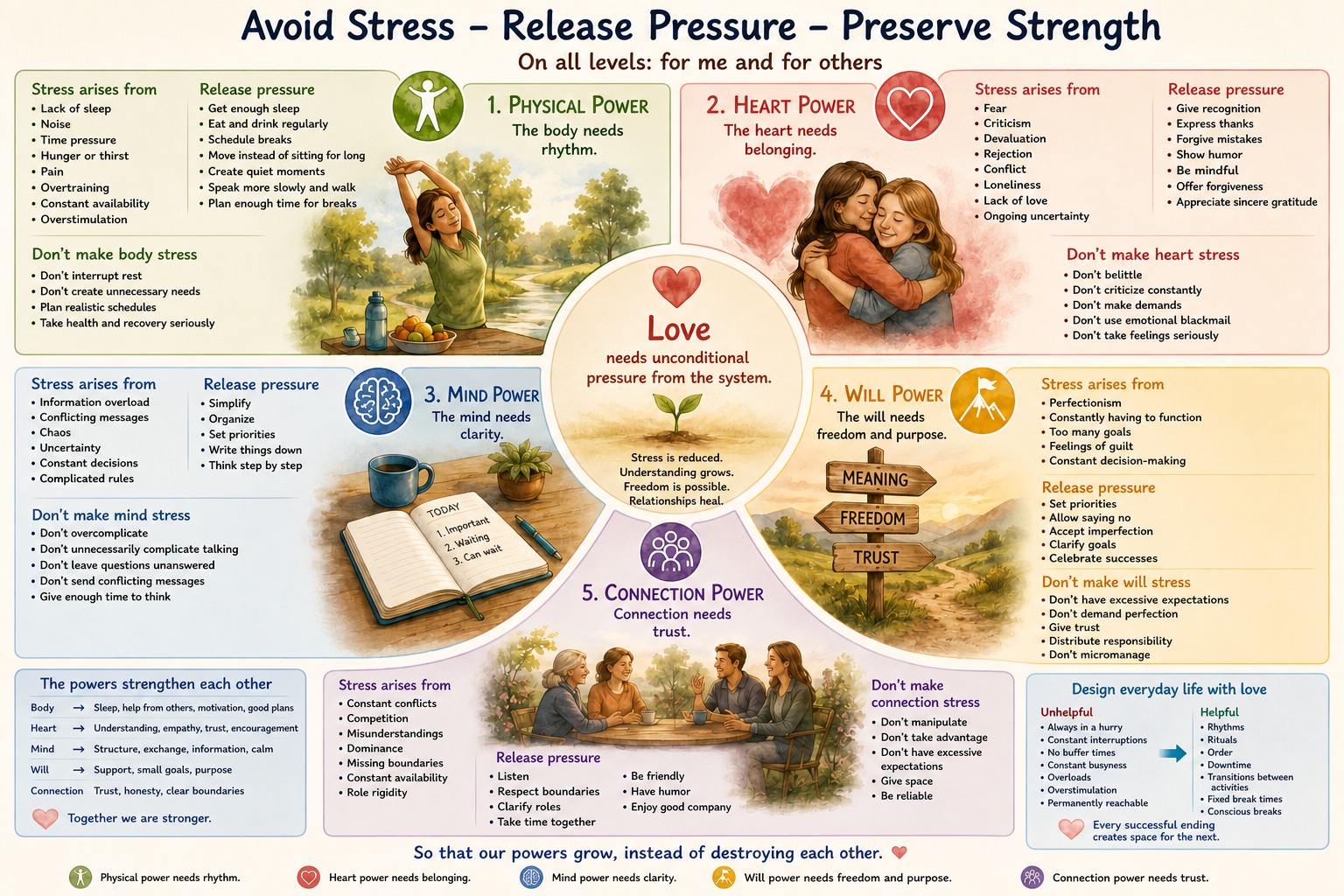
Translation note: Important error: “take feelings seriously” became “Don’t take feelings seriously”, reversing the advice.
Thieves of Strength
Some habits and environments drain strength slowly enough to feel normal. Naming the thieves makes it easier to protect energy, set limits, and choose sources that genuinely regenerate us.
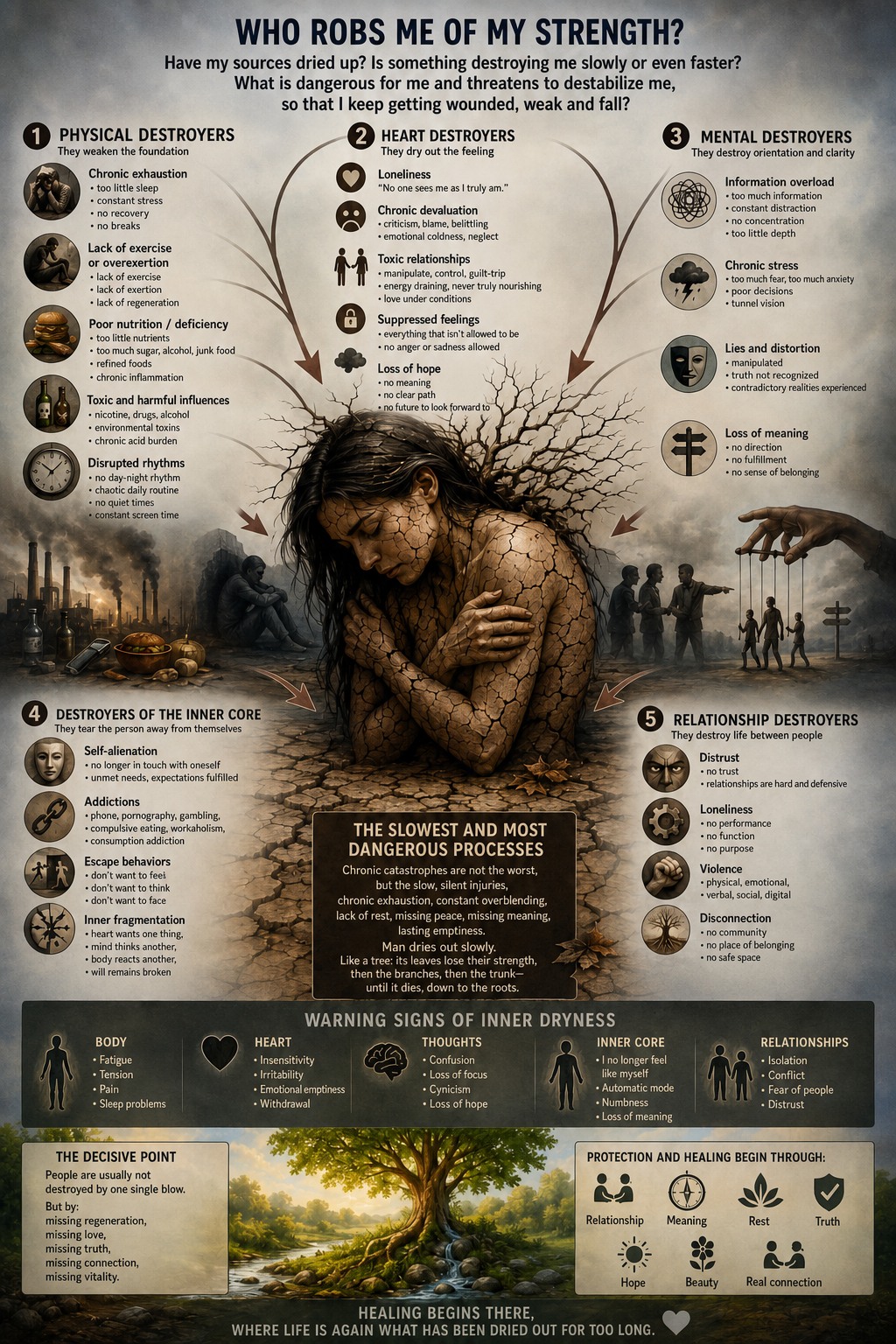
Translation note: Dauerhärte became “Loneliness” instead of chronic hardness or rigidity; a few phrases are more dramatic than the source.
Waking Up
This poem speaks of waking from habit, distraction, and inner sleep. Its movement invites attention back to what is alive, meaningful, and ready to begin.
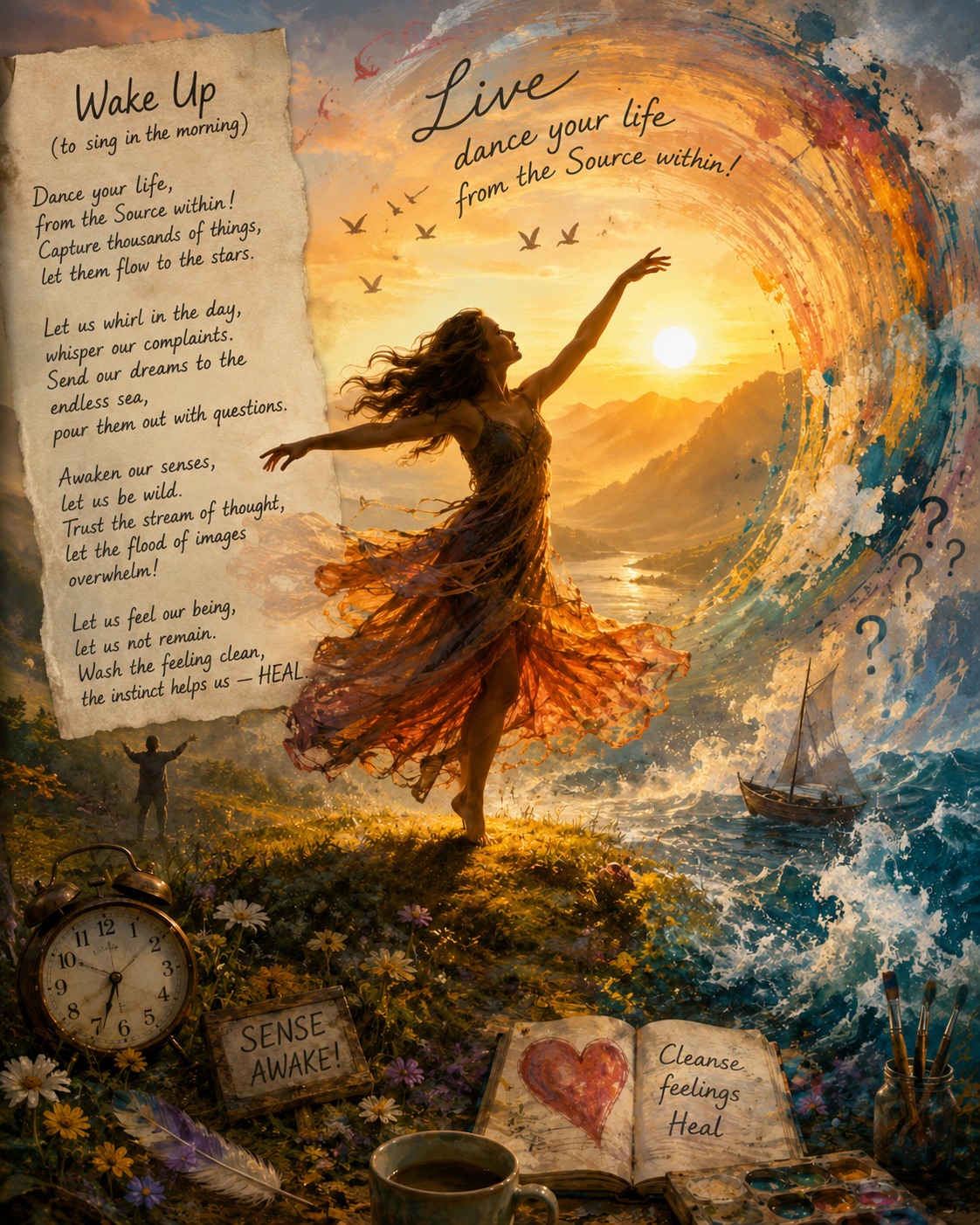
Translation note: This is a free poetic translation: the rhyme is not preserved and several images differ, including a line changed toward “flow to the stars”.
Energy Up
Energy can rise through many small influences: rest, nourishment, movement, orientation, connection, and manageable goals. The image is a reflection tool, not a medical diagnosis.
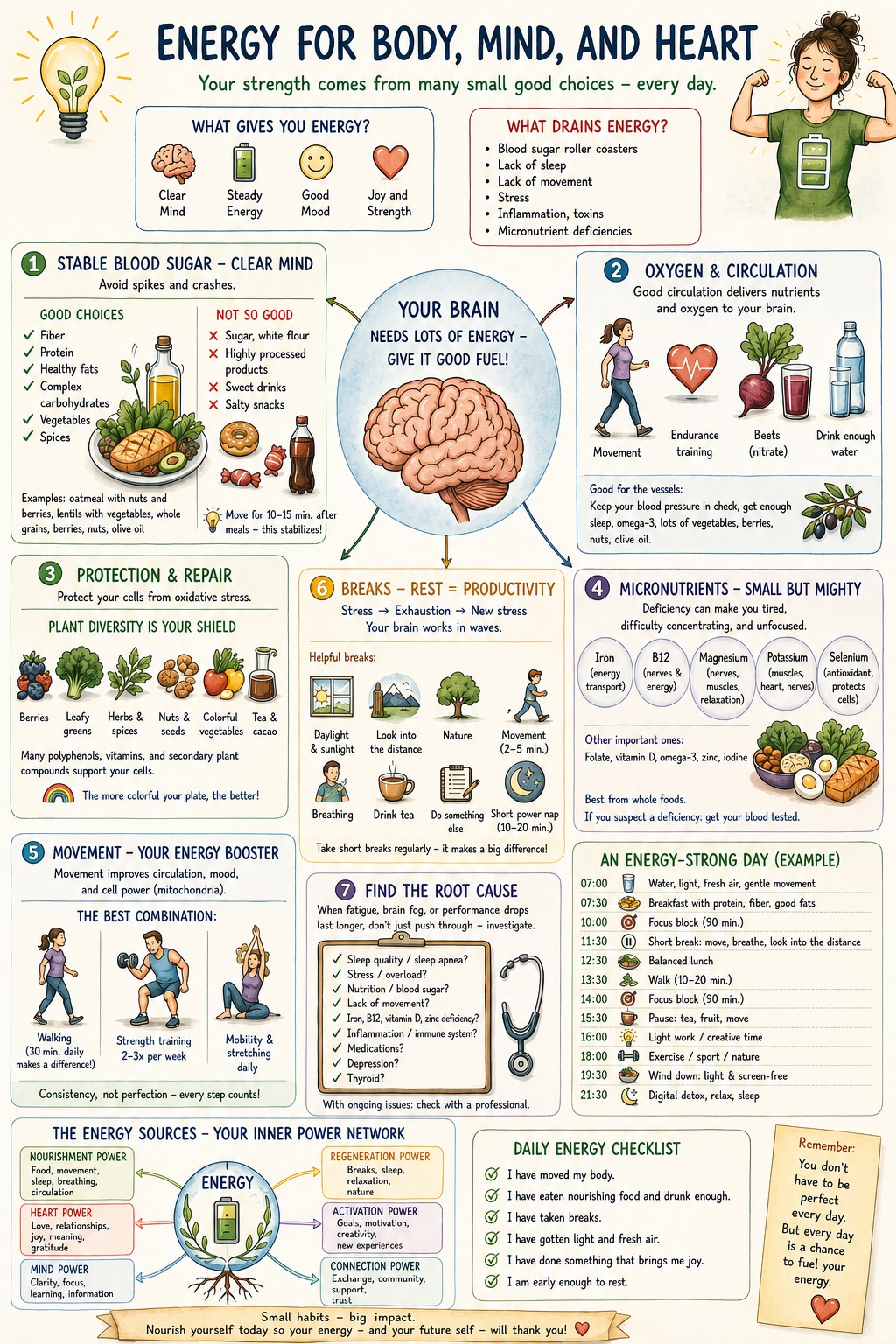
Translation note: Some statements were clarified or changed; medical statements in the image were translated but not independently verified.
Learning to Love Yourself
Self-love is an active relationship with one’s own life. It joins protection, honesty, responsibility, warmth, and the ability to remain open to others without abandoning oneself.
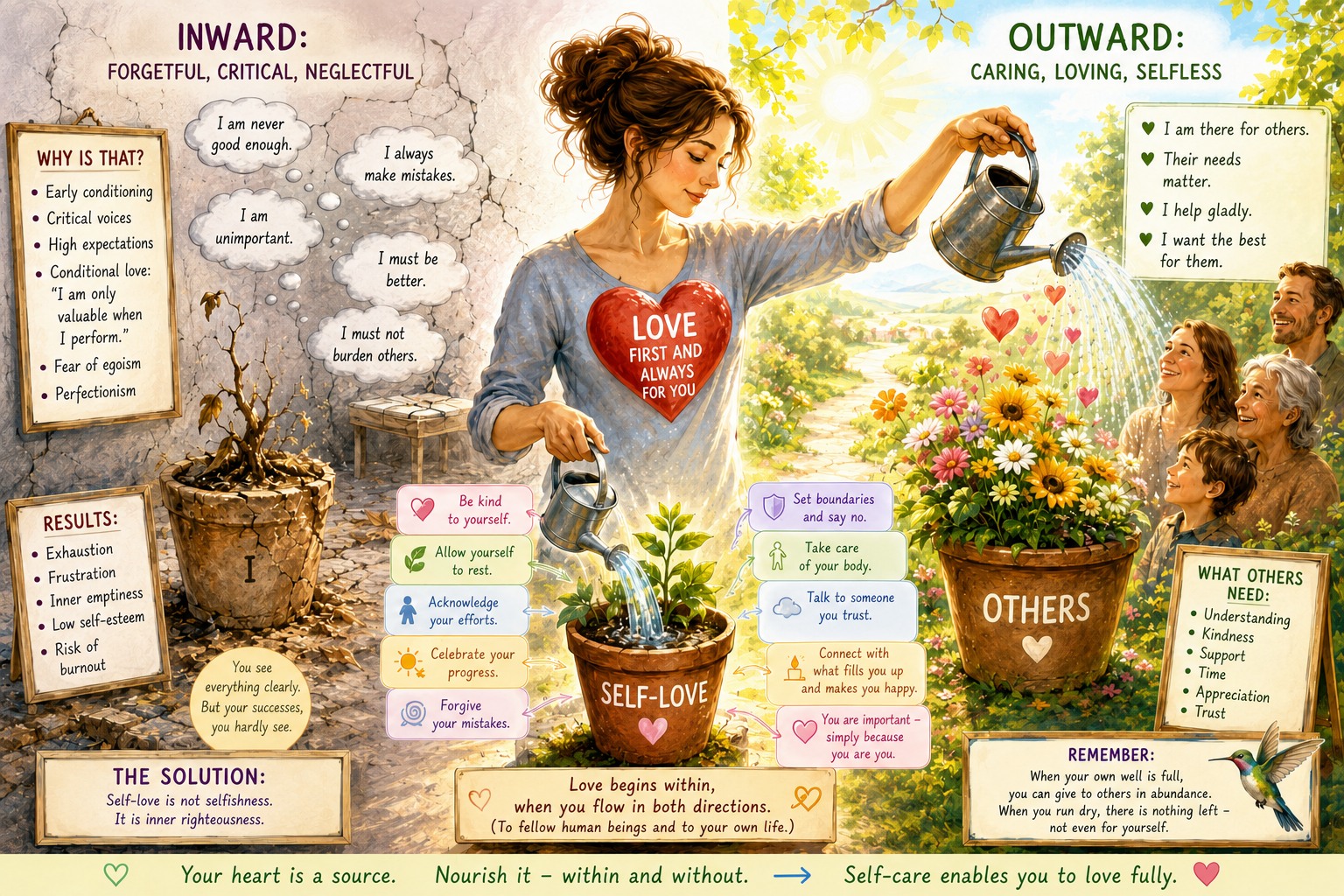
Translation note: “Self-love is not self-infatuation” became “Self-love is not selfishness”; inner justice also appears as the stiff “inner righteousness”.
Five Sources of Will Force
Will Force is supported by more than discipline. Body, heart, thought, relationship, and deliberate practice each contribute a different kind of energy to choosing and continuing.
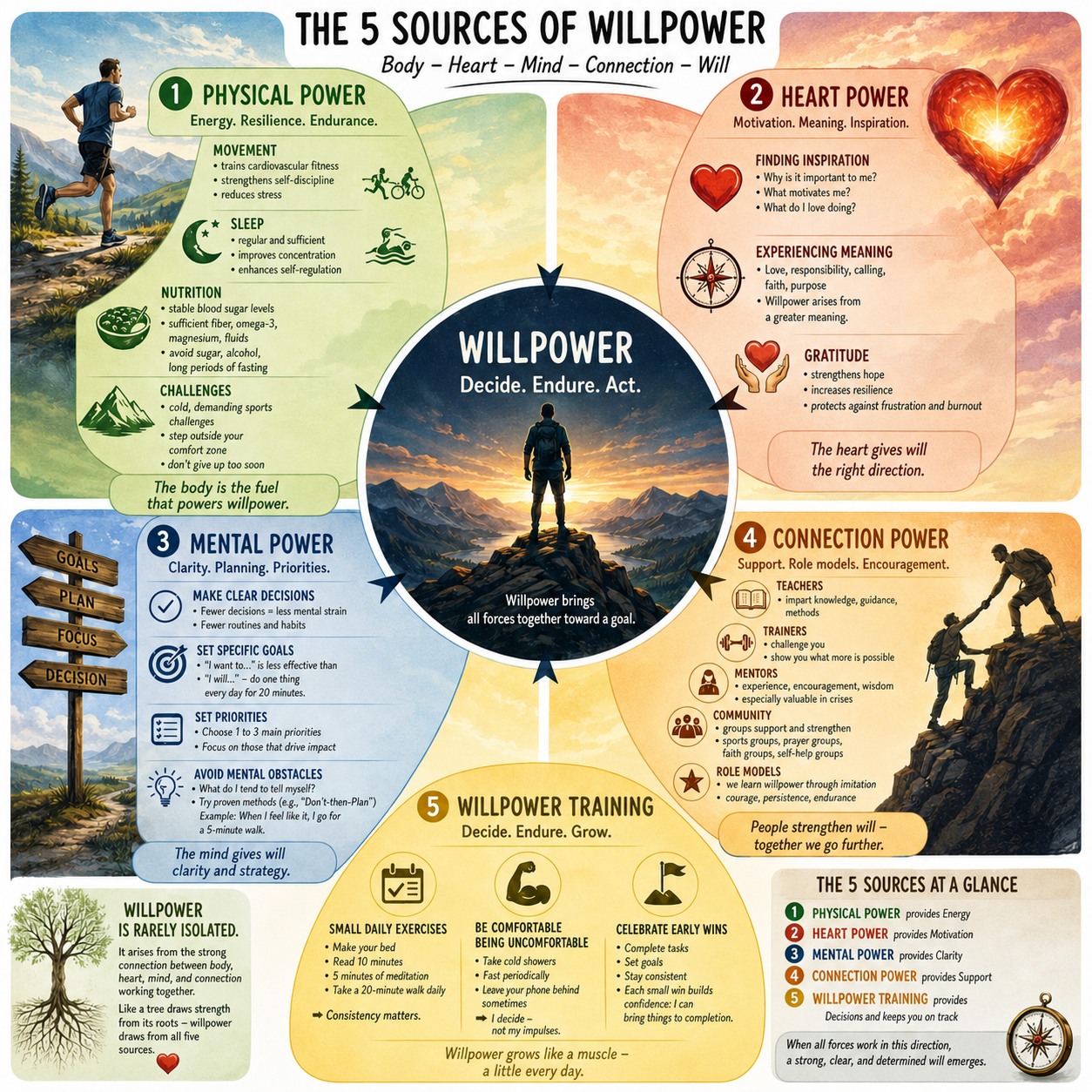
Translation note: Terminology alternates between Force and Power, and examples about avoiding mental obstacles were freely reworded.
Limits, Frustration, and Tiredness
A limit is information. Frustration, fatigue, and resistance can reveal where one force is overused, another is neglected, or the current goal no longer fits the available energy.
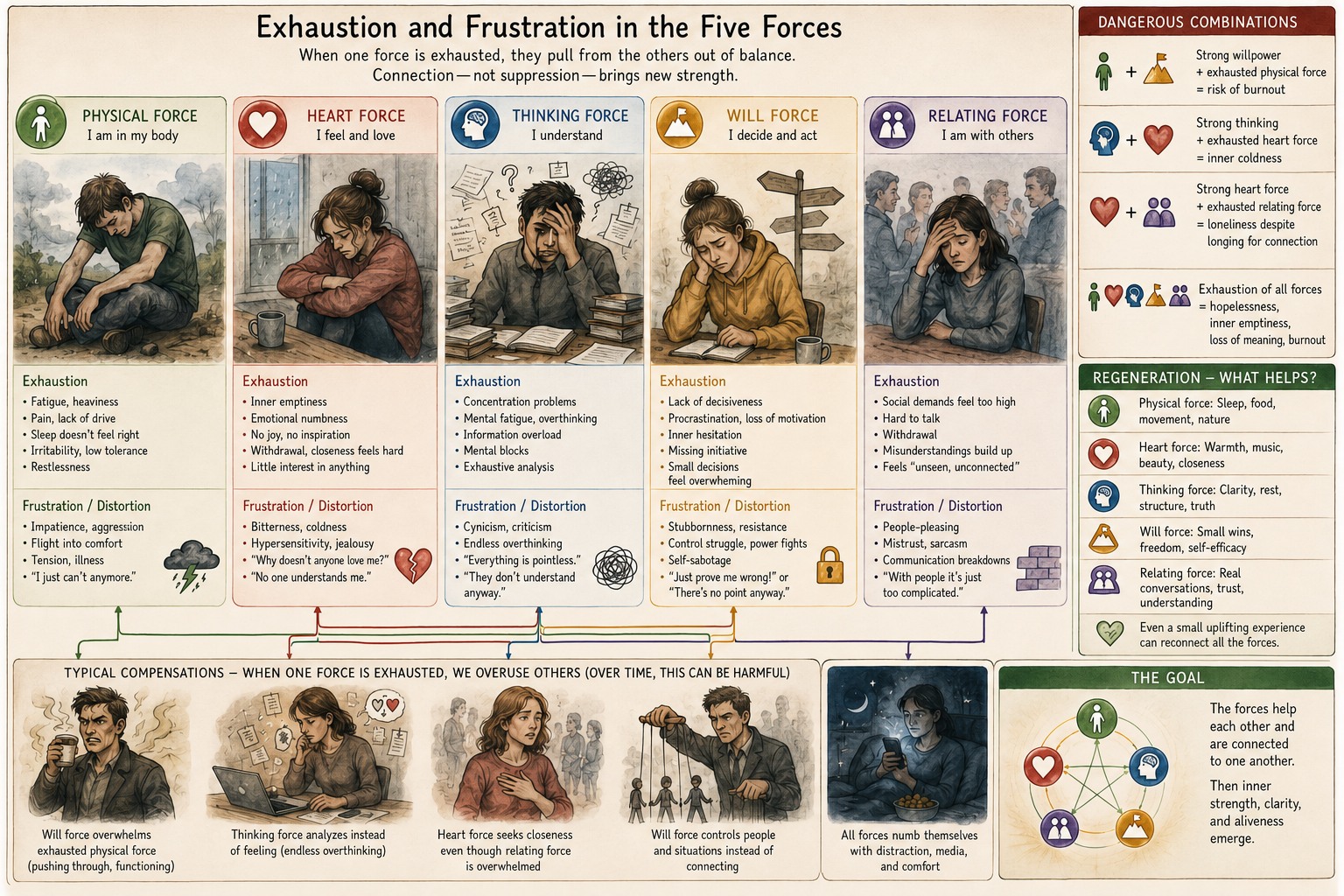
Translation note: “Typical compensations” was narrowed to “Physical compensations”, and the wording about exhausted Physical Force was changed.
The Ups and Downs of Our Forces
Human strength moves in rhythms. Recognizing natural variation prevents every low point from becoming a failure and every high point from becoming a demand for permanent performance.
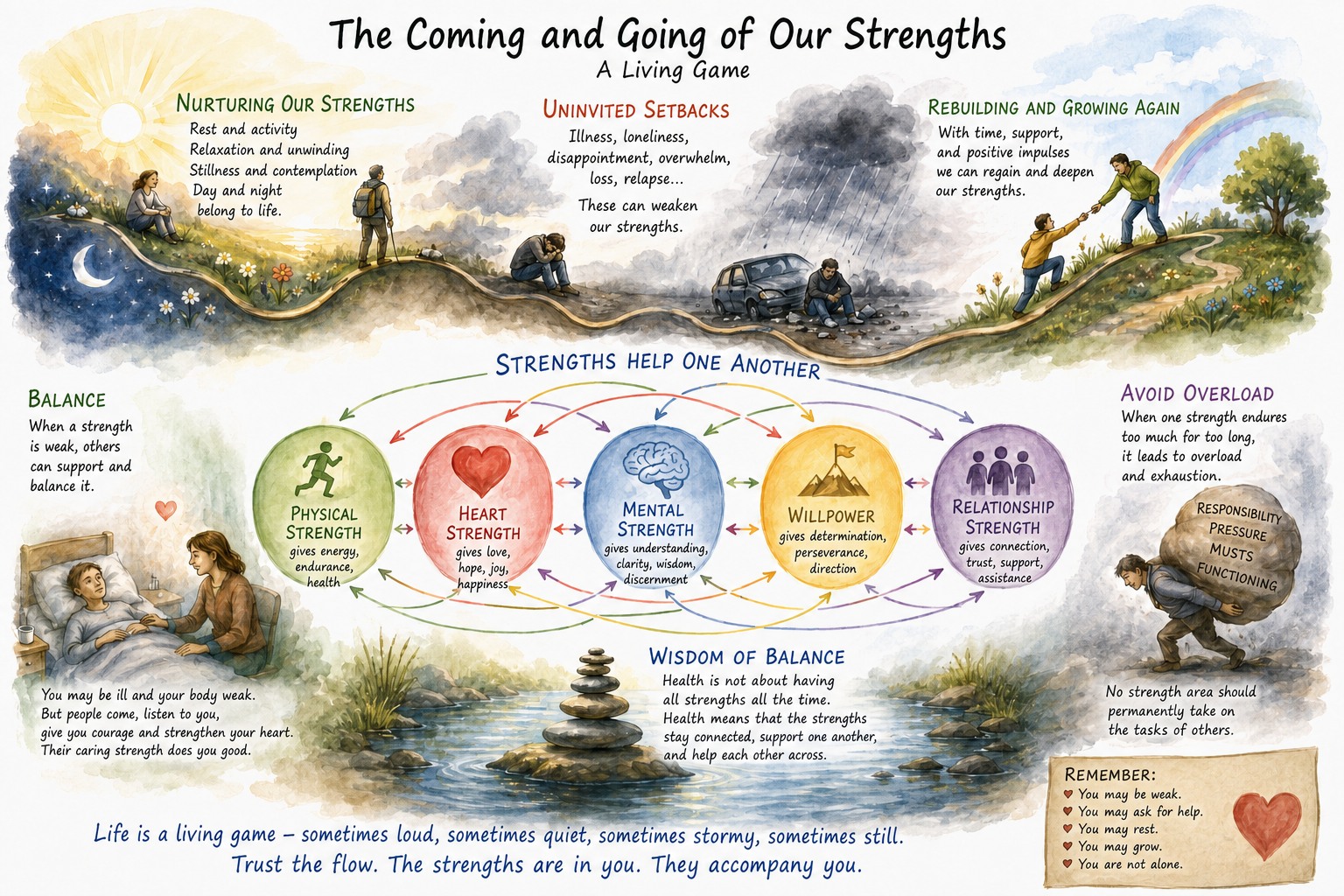
Translation note: “Natural ups and downs” became the meaning-shifted “Nurturing Our Strengths”; “A living interplay” was shortened to “A Living Game”.
What Does This Person Need Now?
Need becomes clearer when we ask which force is calling for care. The same outward behavior can arise from bodily depletion, emotional pain, confusion, blocked agency, or missing connection.
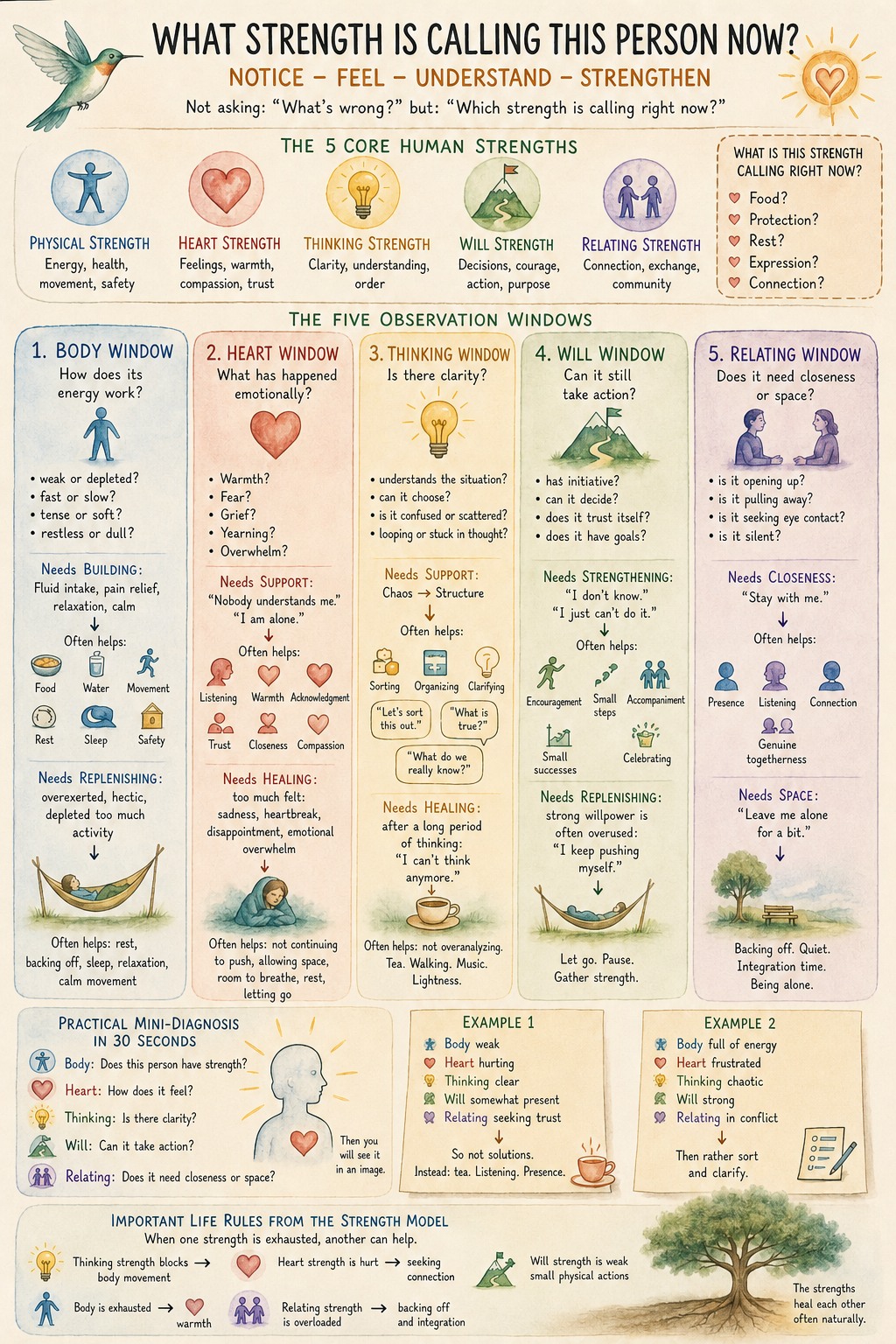
Translation note: The key question changed from “Which force does this person need now?” to “What strength is calling this person now?”, shifting need into a call.
Thinking Errors and Force
Thinking errors can shape feeling, action, the body, and relationships. This chart is useful for discussion, but its translated categories must be checked against the German source before being used as a precise reference.
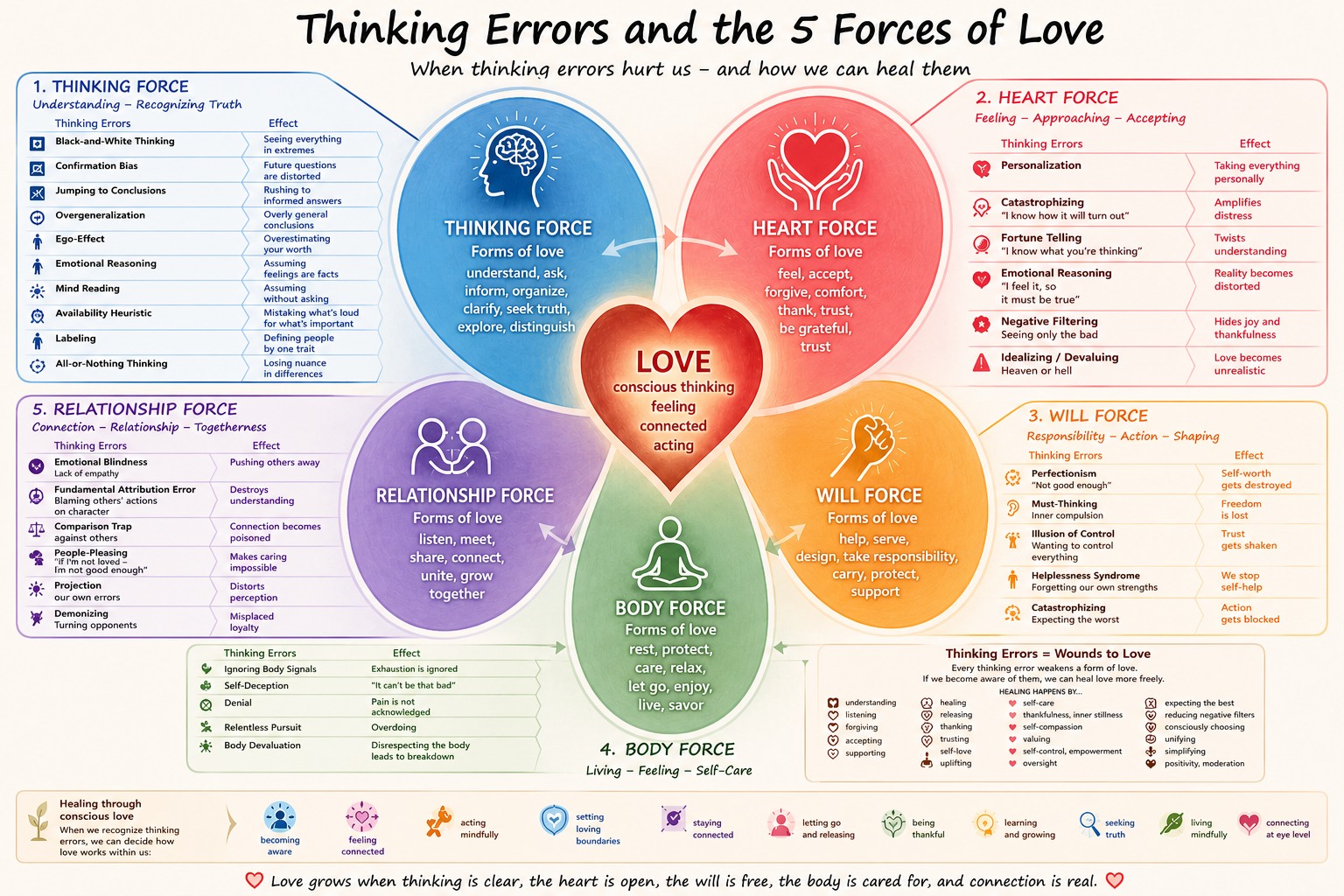
Translation note: Major issue: many categories were replaced or invented. Mind reading and emotional reasoning became Catastrophizing and Fortune Telling; several Thinking and Relationship rows were also changed or reordered.
Time – Our Most Valuable Water
Time behaves like water: it can nourish life, carry possibility, or disappear without creating value. The five force questions help distinguish necessary, regenerative, meaningful time from patterns that drain us.
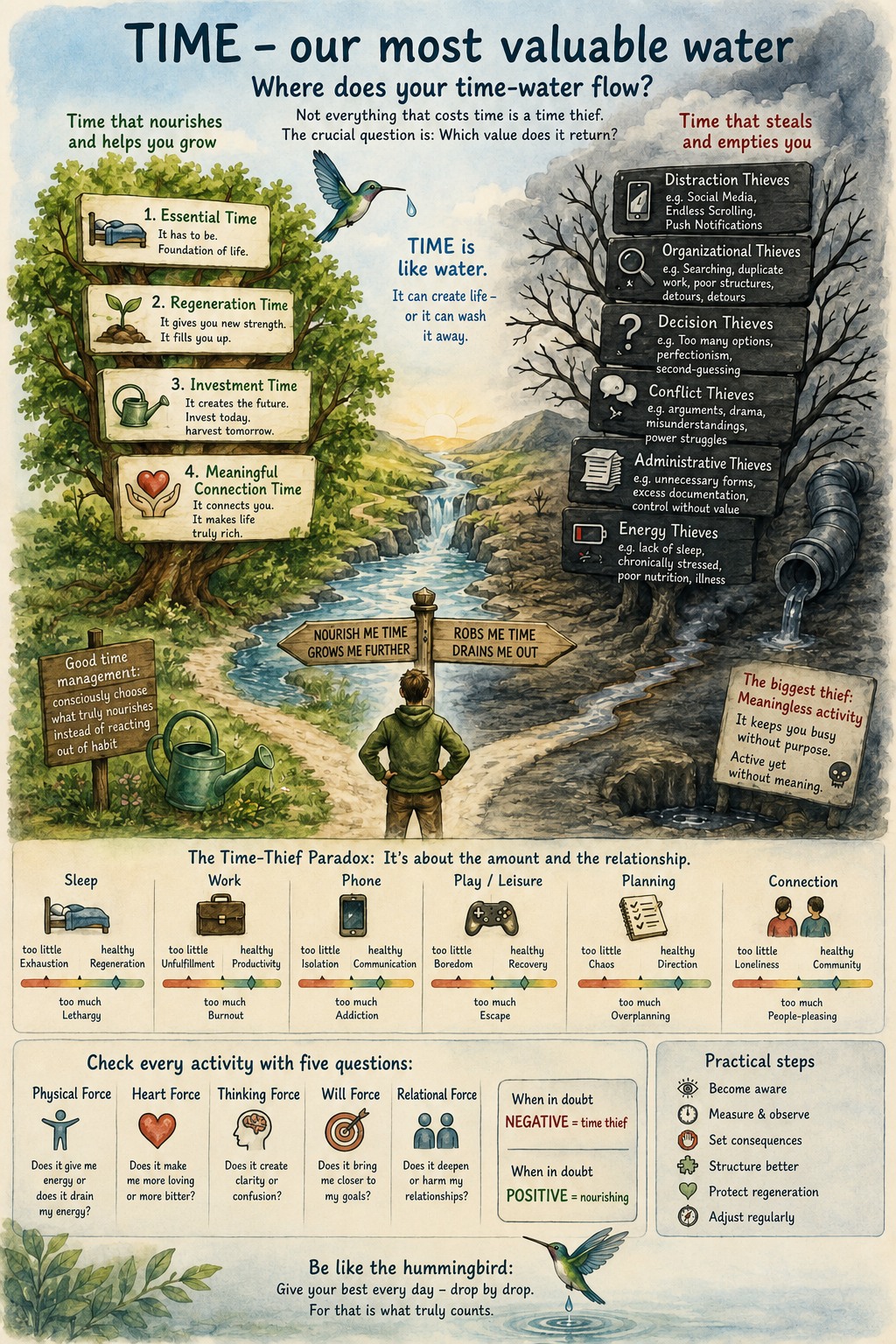
Translation note: The left sign is ungrammatical; “predominantly negative/positive” became “when in doubt”, and versickern was rendered as “wash it away”.
Two Ways to See Your Time Stream
The hourglass and river show the same question from two angles: What receives our limited time-water, and what does that investment return to life? Awareness makes direction possible.
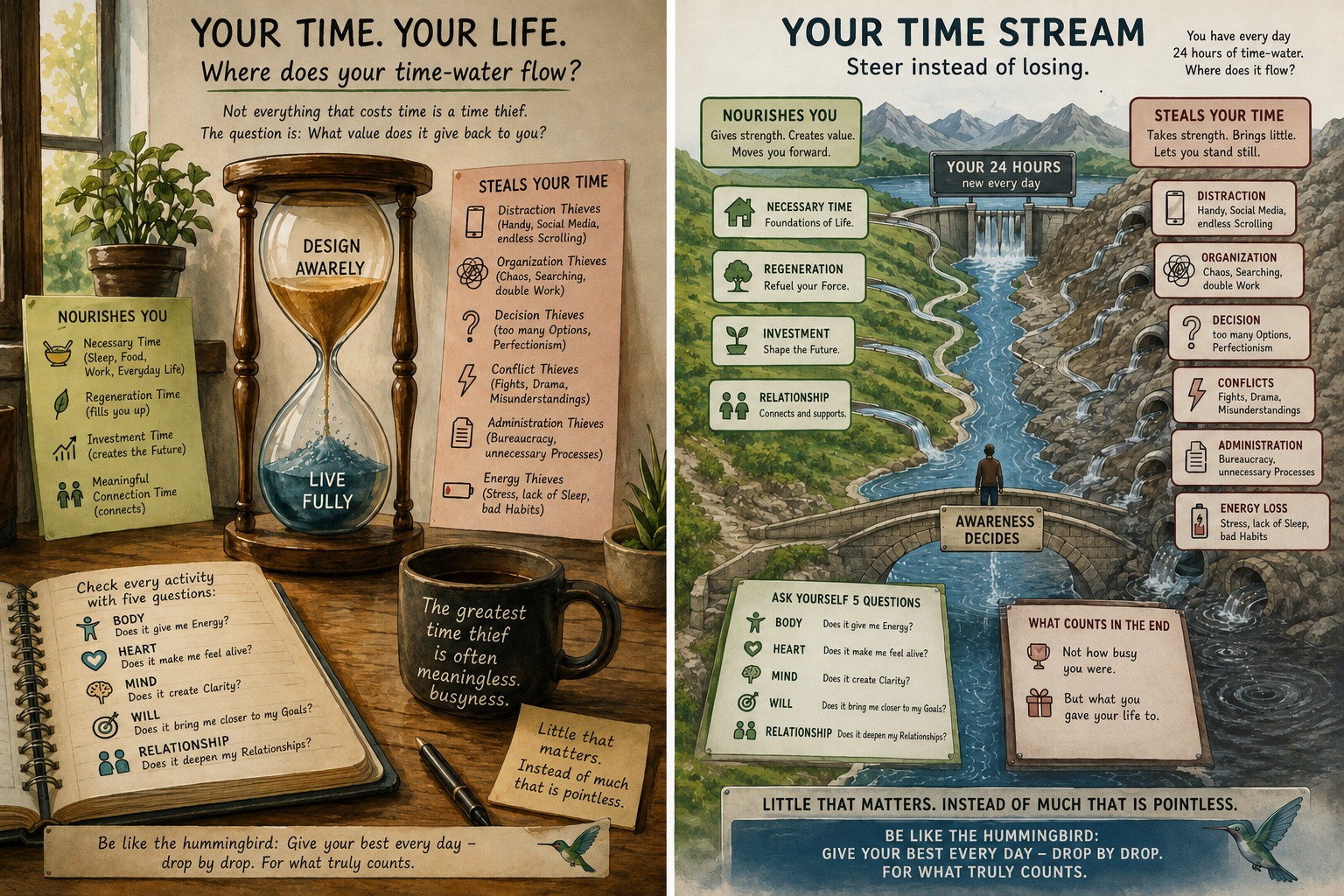
Translation note: “Design awarely” and “Steer instead of losing” are unidiomatic; Relationship and Connection are used inconsistently.
A Person Thirsting for Time
Distraction can scatter time-water before ideas have a chance to grow. The poem asks us to concentrate attention on the few seeds that are genuinely worth watering.
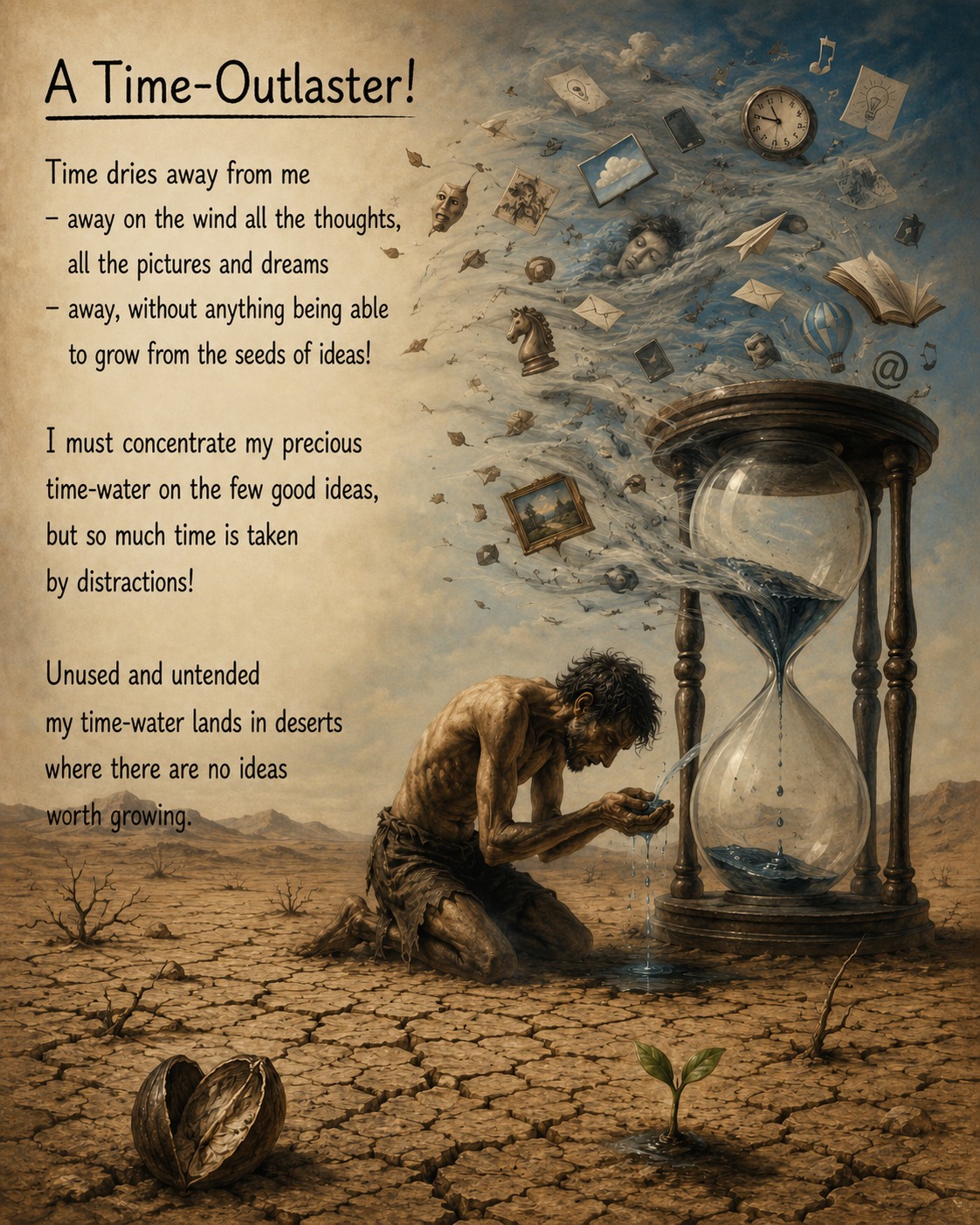
Translation note: The title Zeitverdurstender was mistranslated as the unclear “Time-Outlaster”; “unused and useless” became “unused and untended”.
Finding Old Seeds
Not every useful idea must be new. Reading, searching, and patient study can rediscover seeds from earlier times and give them enough time-water to grow in the present.
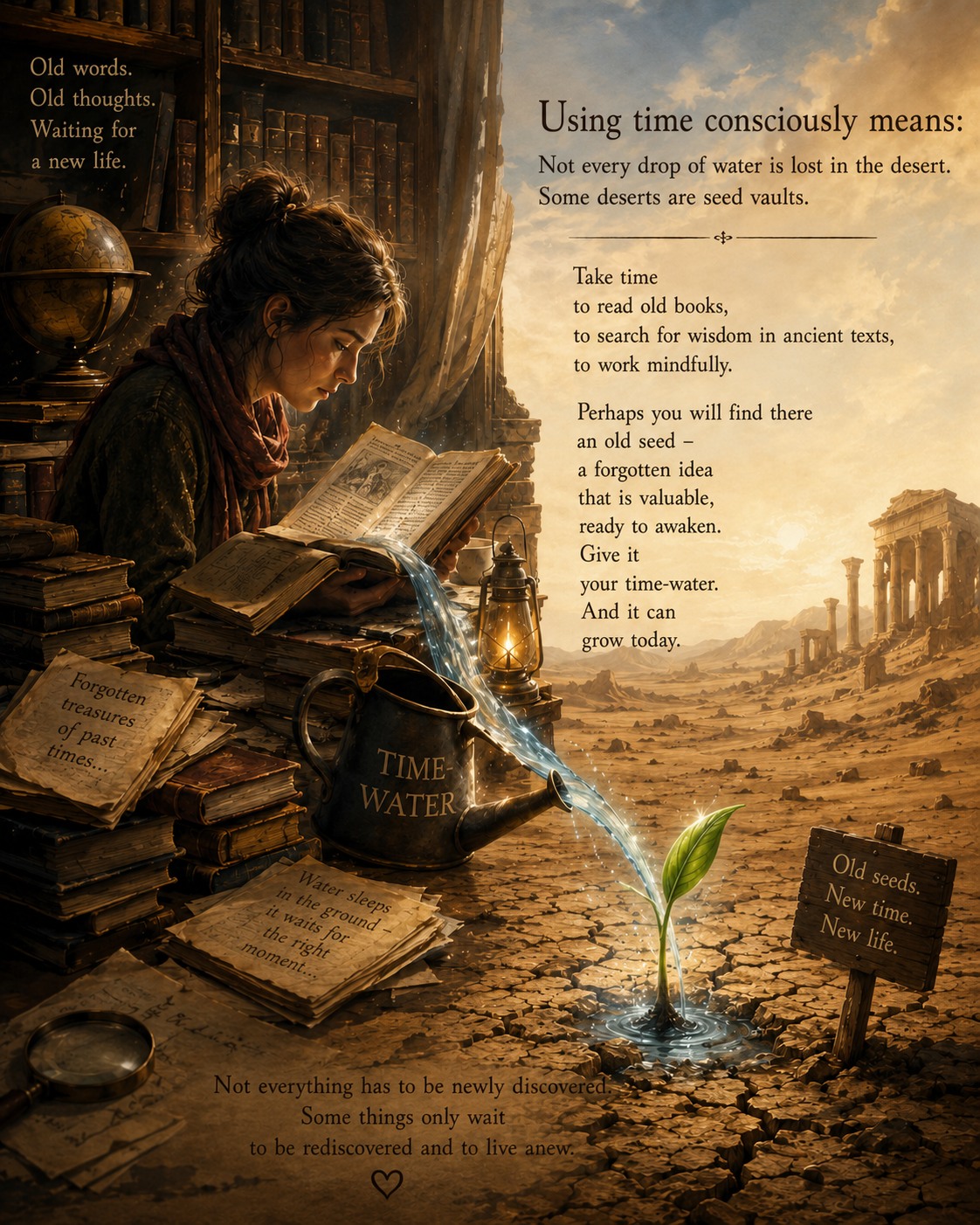
Translation note: “Work your way into it laboriously” became “work mindfully”; “germinate anew” became the freer “ready to awaken”.
Past, Present, and Future
The past shapes us, the future opens imagination, and life can only be lived in the present. Time takes and gives; its meaning grows through the way we meet each moment.
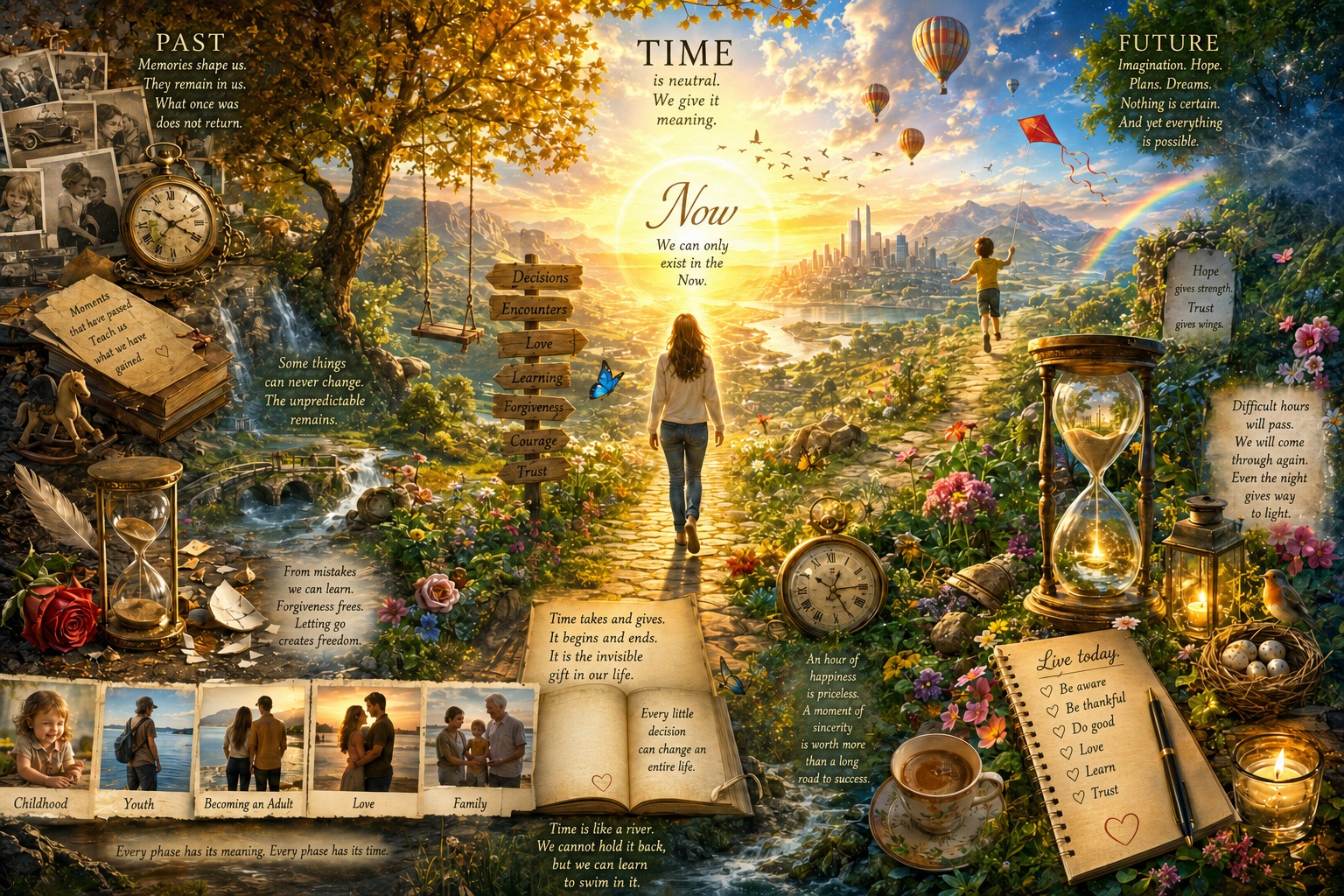
Translation note: Important errors: “irrevocable” became “unpredictable”, dreams became trust in “gives wings”, and an hour of difficulty became a “moment of sincerity”.